

Pay Per Click (PPC) Campaign is one of the most powerful digital marketing tools transforming how brands attract customers in 2025. Whether you run an e-commerce store, a service-based business, or a global brand, a well-planned Pay Per Click Campaign can instantly put your business in front of ready-to-buy customers.
Unlike traditional advertising where you pay upfront and hope for results, PPC advertising is performance-driven — you pay only when someone clicks your ad. With the right strategy, PPC campaigns deliver fast leads, scalable growth, and a high return on investment.
What Is a Pay-Per-Click (PPC) Campaign?
A Pay Per Click campaign is a digital advertising model where advertisers pay a fee each time a user clicks their ad. Instead of earning website visitors organically through SEO, PPC lets you buy traffic.
Platforms that use PPC include:
- Google Search Ads
- YouTube Ads
- Meta Ads (Facebook & Instagram)
- LinkedIn Ads
- Bing Ads
- Amazon Sponsored Ads
- Pinterest Ads
- TikTok Ads
The most common form is Search Pay Per Click Campaign, where ads appear on Google when users search for a keyword.
Example:
A user searches “best digital marketing agency near me”. Google displays sponsored ads from businesses bidding on that keyword.
Why Pay Per Click Campaign Matter in 2025
In 2025, Pay Per Click (PPC) advertising remains one of the most effective and measurable digital marketing strategies. As online competition grows and customer attention spans shrink, PPC offers businesses a direct, data-driven way to reach their target audience instantly.
1. Instant Visibility in a Crowded Market
Organic reach takes time, but PPC ads can place your brand at the top of search results or social feeds within hours. This makes it a powerful tool for new product launches, seasonal offers, or quick traffic boosts.
2. Advanced Targeting Capabilities
With AI-driven algorithms and improved audience insights, PPC platforms like Google Ads and Meta Ads now allow hyper-targeting — based on interests, search behavior, demographics, and even purchase intent.
3. Measurable ROI and Real-Time Optimization
Unlike traditional advertising, PPC gives you full control and visibility over performance. You can track clicks, conversions, and costs in real time — adjusting your campaigns instantly for better ROI.
4. Integration with AI and Automation
AI is transforming PPC in 2025. Smart bidding, automated ad creation, and predictive analytics help advertisers make data-backed decisions and maximize every dollar spent.
5. Enhanced Personalization and User Experience
Modern PPC campaigns go beyond keywords — they deliver personalized messages and creative visuals that speak directly to user intent, improving engagement and conversion rates.
6. Ideal for Multi-Channel Marketing
PPC seamlessly integrates with SEO, content marketing, and social media strategies. This multi-channel synergy ensures your brand stays visible throughout the entire customer journey.
PPC remains one of the most profitable digital marketing channels because:
- Immediate traffic & leads
- Target people who already want your product
- Full control over budget & audience
- Fast testing & optimization
- Better tracking and performance measurement
- Works alongside SEO for maximum visibility
With AI advancing campaign automation, PPC has become even more powerful—and competitive. Brands that use intelligent bidding, quality ad copy, and high-performing landing pages will win.
Types of Pay Per Click Campaign
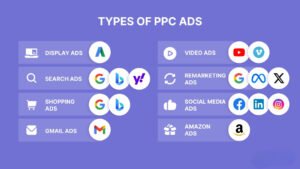
Pay Per Click advertising isn’t one-size-fits-all. In 2025, marketers can choose from several PPC campaign types based on their goals — whether it’s driving traffic, generating leads, or increasing sales. Below are the most effective PPC campaign types you should know:
1. Search Ads
This is the most common and reliable PPC ad format for driving results. They appear at the top of search engine results when users search for specific keywords. Perfect for capturing high-intent traffic ready to convert.
2. Display Ads
Display ads use visual banners or images across Google’s Display Network and partner websites. They’re excellent for building brand awareness and retargeting users who’ve previously visited your site.
3. Social Media Ads
Platforms like Facebook, Instagram, LinkedIn, and X (Twitter) allow businesses to run highly targeted campaigns based on demographics, interests, and behavior — ideal for boosting engagement and conversions.
4. Shopping Ads
Used mainly by e-commerce brands, these ads showcase products directly in Google search results with images, prices, and ratings — helping shoppers make quick purchase decisions.
5. Video Ads
Video ads, especially on YouTube and TikTok, capture attention quickly and help tell a brand story. They’re perfect for increasing brand recall and emotional connection with audiences.
6. Remarketing (Retargeting) Ads
These ads re-engage visitors who’ve interacted with your website or app but didn’t convert. Remarketing keeps your brand top-of-mind and often results in higher conversion rates.
7. App Promotion Ads
Designed for businesses with mobile apps, these campaigns drive app installs and engagement, promoting your app across Google Play, YouTube, and other channels.
8. Local PPC Ads
Ideal for small businesses, local PPC targets nearby customers searching for specific services or locations, helping drive foot traffic and local inquiries.
To succeed with PPC, you must choose the right campaign type:
| PPC Campaign Type | Purpose | Platform Examples |
| Search Ads | Show ads based on keywords | Google, Bing |
| Display Ads | Banner ads on websites & apps | Google Display Network |
| Social PPC | Promote ads on social platforms | Facebook, Instagram, LinkedIn |
| Video Ads | Video-based promotion | YouTube, TikTok |
| Shopping Ads | Promote ecommerce products | Google Shopping, Amazon |
| Remarketing | Retarget past visitors | Google, Meta |
| App Promotion Ads | Drive app installs | Google, Apple Store |
How PPC Works: Key Components
Pay Per Click (PPC) advertising works on a simple principle — you pay only when someone clicks your ad. But behind that click lies a smart, data-driven system designed to deliver maximum results. Understanding its key components helps you build more effective and profitable campaigns.
To run a successful Pay Per Click Campaign, you must understand its core elements:
1. Keywords
The terms users search for.
Example: “best fitness trainer Dubai”
2. Bid Strategy
The amount you bid for every click your ad receives.
3. Ad Quality / Quality Score
Google evaluates your ad based on relevance, landing page quality, and expected click-through rate.
4. Ad Copy
Engaging text that convinces users to click.
5. Landing Page
Dedicated page where users complete an action (purchase, subscribe, contact).
6. Conversion Tracking
Measuring key actions users take after clicking the ad.
How to Create a High-Converting Pay Per Click Campaign (Step-by-Step)
Step 1: Set Clear Campaign Goals
Define what you want:
- Sales
- Lead generation
- Website traffic
- App installations
- Brand awareness
Goals guide your ads, budget, and targeting.
Step 2: Conduct Keyword Research
Use keyword tools like:
- Google Keyword Planner
- SEMrush
- Ahrefs
- Ubersuggest
Find a mix of:
| Keyword Type | Example | Purpose |
| Broad Keywords | Digital marketing services | Awareness |
| Long-Tail Keywords | Affordable SEO services for restaurants | High intent |
| Branded Keywords | Nike running shoes | Brand-specific |
| Competitor Keywords | Alternative to Shopify | Market capture |
Focus on high intent keywords—terms showing clear purchase intent.
Step 3: Choose Campaign Type & Platform
Select the right network (Google, Facebook, LinkedIn, etc.)
Example:
If you’re selling B2B software → LinkedIn + Google Search works best.
If you’re selling fashion products → Instagram + Google Shopping is ideal.
Step 4: Write Powerful Ad Copy
Great PPC ads use:
- Strong headline
- Benefit-driven message
- Emotional trigger
- Clear call-to-action
Example PPC Ad Copy:
Grow Your Business with Expert PPC Ads
ROI-Focused Google Ad Specialists.
Book a Free Consultation Today.
Step 5: Design a High-Converting Landing Page
Your landing page should include:
- Clear headline
- Key benefits
- Social proof / Reviews
- Strong CTA buttons
- Fast load speed
- Mobile-friendly design
Remember: Ads attract—landing pages convert.
Step 6: Set Budget & Bidding Strategy
Choose bidding options:
| Bidding Type | Best For |
| CPC (Cost-Per-Click) | Beginners & traffic |
| CPA (Cost-Per-Acquisition) | Lead/sales campaigns |
| Maximize Conversions | AI-driven automation |
| Target ROAS | E-commerce scaling |
Start small, optimize, then scale.
Step 7: Track & Optimize Performance
Monitor:
- CTR (Click-Through-Rate)
- CPC (Cost-Per-Click)
- Conversion Rate
- CPL (Cost-Per-Lead)
- ROAS (Return on Ad Spend)
Remove poor keywords, improve ads, A/B test headlines, and adjust bids.
Common PPC Mistakes to Avoid
Running a Pay Per Click campaign can deliver incredible results — but only if it’s done strategically. Many businesses waste budget and miss opportunities due to simple but costly errors. Here are the most common PPC mistakes to avoid in 2025:
- Targeting broad keywords only
- Sending traffic to homepage instead of landing page
- Not using negative keywords
- No conversion tracking
- Not testing ad variations
- Ignoring mobile optimization
- Poor budget allocation
Future of PPC Advertising: Key Trends for 2025
As digital marketing grows more competitive, PPC advertising continues to redefine how brands attract, engage, and convert audiences. With advancements in automation, AI, and data analytics, 2025 marks a new era of smarter, more personalized ad strategies.
- AI-powered bidding & automation
- Voice search keywords
- First-party data targeting
- Short-form video ads rise
- Smart audiences & lookalikes
- Machine-learning ad optimization
- Increased competition → focus on quality score
The brands that leverage AI tools, automation, and creative ad strategy will win the PPC game.
Conclusion
A Pay-Per-Click campaign is no longer just an advertising tactic — it’s a powerful growth engine for businesses of all sizes. When executed strategically, PPC can:
-
Bring instant, high-quality traffic to your website
-
Generate consistent leads and sales
-
Strengthen your brand authority and visibility
-
Support other marketing efforts like SEO, content, and email marketing
But success in PPC isn’t just about setting up ads — it’s about data-driven optimization, creative testing, and smart automation. In 2025, the most successful marketers are the ones who embrace AI-powered tools, analyze performance metrics continuously, and refine their campaigns based on real audience behavior.
By combining creativity with analytics, and automation with human insight, you can turn PPC from a short-term ad spend into a long-term profit driver.
Whether you’re a beginner or a seasoned marketer, mastering PPC in 2025 will give your business a decisive edge in a crowded digital marketplace — helping you grow faster, smarter, and more sustainably.
Author : Shilpa VK
